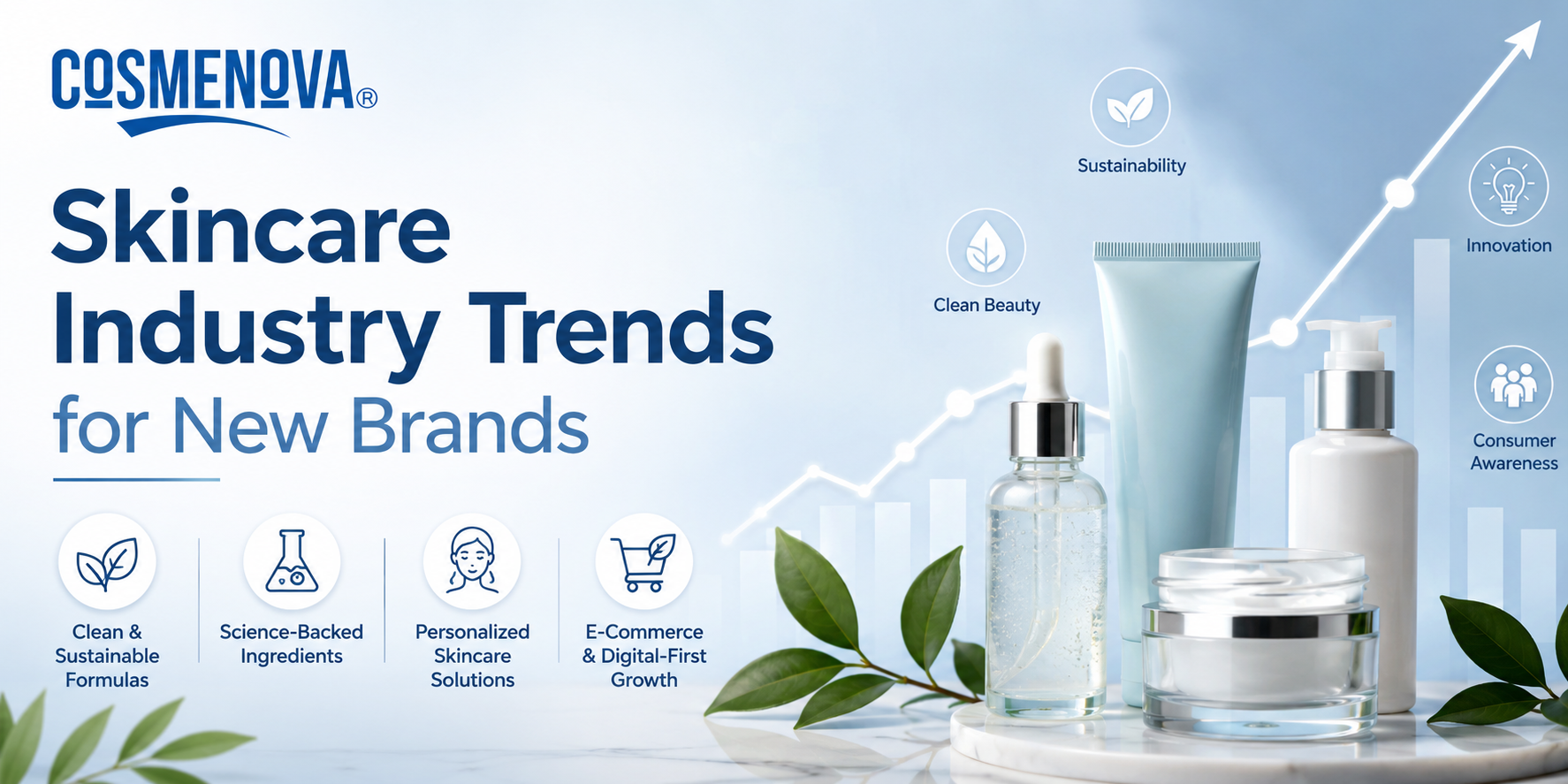
Firstly, it is essential to know what trends to capitalise on within the skincare industry in order to start your venture successfully. As we know, the global cosmetics market will reach more than $330 billion in 2026, while the share of skincare is estimated at almost 42%. These numbers are impressive; however, they also mean that there is tough competition between thousands of brands in order to be seen by the customer on the shelf or while scrolling through the page of a product. This article will highlight the best chances to succeed based on cosmetic industry statistics around the world.
Cosmetic Industry Statistics Worldwide Every Founder Should Know
However, it is useful to look at some figures that lie beneath the list of trends. Depending on the research company, the numbers differ, yet there is a general trend.
- The world market of cosmetics in 2026 accounted for approximately $330-361 billion, which is expected to grow at a CAGR of 5-6.6% until the early 2030s.
- Skincare accounts for the biggest beauty segment, which accounts for 42%-48% of the industry revenues.
- The American market of cosmetics accounts for $105 billion per year, whereas the Asia-Pacific region has almost 40% of the global market share.
- Nowadays, Gen Z customers spend, on average, $342 per year on cosmetics, making this generation spend more than any other generation since 2018.
- More than half of Americans (56%) claim that they compare ingredient lists rather than trust the brand.
Statistics in the cosmetics industry worldwide are crucial because they show what segments are growing: skincare, young clients, and ingredient-conscious people. No cosmetic brand strategy that is based on the outdated “average” customer can be effective nowadays.
The Best Skincare Industry Trends for New Brands to Watch in 2026
With the market setting complete, here are the best skincare industry trends for new brands to build a launch strategy on.
Biotechnology-enabled formulations: New brands will rely on laboratory-enabled active ingredients and new research on ingredients rather than the same old buzzwords for differentiation.
Slow-release and encapsulated active ingredients: Slow-releasing ingredients in capsules help protect the skin while delivering potent formulas, such as those containing retinol, in response to consumer backlash against “more is more” regimes.
Microbiome and longevity science: Consumers have begun shifting from looking for an immediate effect to skin longevity, making brands that provide scientific explanation for their claims desirable.
AI-based personalised skincare: Cosmetic manufacturers use advanced technology that allows independent brands to keep up with larger brands in providing individualised diagnostics and personalised formulations using quizzes.
Radical ingredient transparency: The Modernisation of Cosmetics Regulation Act, among other regulatory changes, requires registration of facilities as well as ingredient disclosure.
Diverse formulation and marketing: Skin of different colours, ages, and skin conditions is the key area of growth for new brands in the skincare industry.
Beauty Industry Trends 2026 Shaping the Competitive Landscape
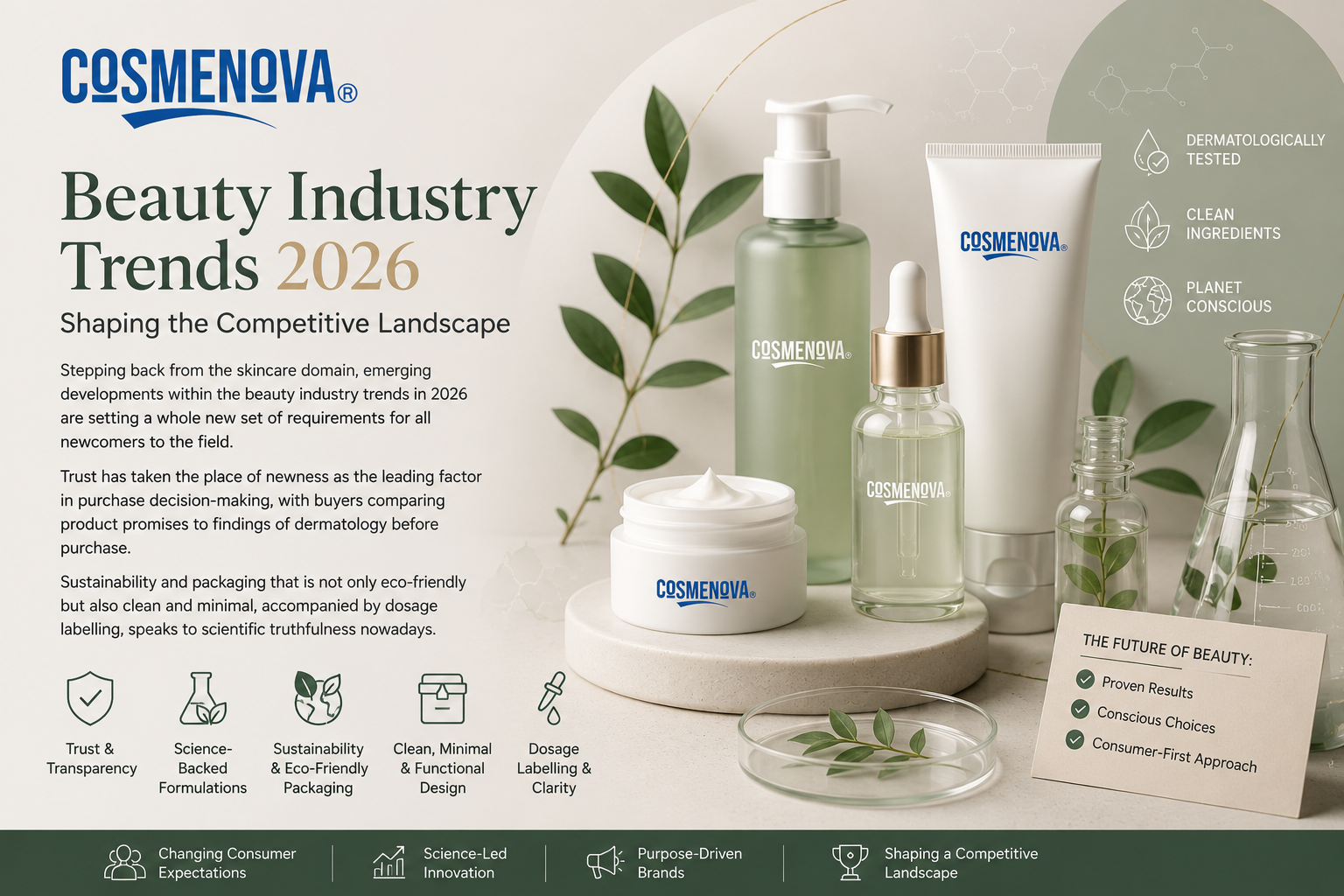
Stepping back from the skincare domain, emerging developments within the beauty industry trends in 2026 are setting a whole new set of requirements for all newcomers to the field. Trust has taken the place of newness as the leading factor in purchase decision-making, with buyers comparing product promises to findings of dermatology before purchase. Sustainability and packaging that is not only eco-friendly but also clean and minimal, accompanied by dosage labelling, speaks to scientific truthfulness nowadays.
Trends in Beauty Industry: From Celebrity Faces to Clinical Proof
One of the clearest trends in beauty industry circles right now is the decline of celebrity-only endorsement strategies. A famous face can still open doors, but it no longer closes a sale on its own. Shoppers expect visible before-and-after results, third-party testing, and dermatologist input alongside any influencer partnership. For a new brand with a limited marketing budget, this is good news: credible science and honest before-and-after content can outperform a paid celebrity campaign at a fraction of the cost.
Skincare Trends 2026: What Consumers Actually Want
Zooming into product-level behaviour, the skincare trends 2026 data points to a few consistent consumer priorities. Korean-inspired multi-step routines continue to grow, framing skincare as a ritual of self-care rather than a chore. At the same time, shoppers are pushing back against overly complex regimens, favouring fewer products that do more. Devices such as LED masks and at-home diagnostic tools are moving from luxury add-ons to mainstream expectations, and “glass skin” style finishes remain a top aesthetic goal across regions.
Future Trends in Beauty Industry: Where the Category Is Headed
Looking even further ahead, the future trends in beauty industry conversations are all about skincare as a tool for enhancing overall well-being, rather than simply a product category. You can look forward to increased connections between skincare, nutrition, sleep, and stress monitoring; increased usage of AI in skin diagnostics and continued pressure on brands to prove their claims with scientific evidence rather than marketing jargon. Companies that consider longevity science a serious area of research, rather than just an updated version of old-school anti-ageing marketing, will excel in this next stage of the game.
Turning Skincare Industry Trends for New Brands Into a Launch Strategy
Knowledge about the current skincare industry trends for new brands becomes valuable only if it drives decisions regarding how you design your brand. First off, choose one or two scientifically valid differentiators from these trends to focus on, rather than trying to capitalise on each one. Make ingredient transparency a must for your packaging and website right away, since the regulatory environment becomes ever more strict. Invest in the proof of the concept: in clinical studies, dermatological research and real-life user success stories, rather than in one-time celebrity endorsements.
Final Thoughts
The brands that will win in this environment are the ones that treat these shifts as a strategic filter, not a checklist to imitate. With cosmetic industry statistics worldwide confirming steady, skincare-led growth, there is real room for new entrants, but only for those who pair genuine innovation with the evidence to back it up.